
Advocacy toolkit to strengthen our social safety nets
This advocacy toolkit has been made to support you in your advocacy with government officials by pulling out some main messages and asks. We encourage you to use our priority policy areas to end deep poverty in your meetings.
Where do we go from here:Six priorities for action
Full implementation of targeted income for former youth in-care by lifting income supports to the Market Basket Measure and lengthening the time to receive unconditional income until age 25.
1
Create a targeted income for people fleeing domestic violence with lump sum and ongoing income supports to provide effective, dignified and empowering support to survivors and their children to help them to move forward and recover after leaving violence.
2
Ensure access and navigation in the social safety net by investing in a strong public sector workforce and streamlining application processes.
3
Make social assistance rates livable by lifting the rates of Income Assistance and Persons With Disability Assistance to the Market Basket measure, while reducing clawbacks on benefits.
4
5
Make work work by better supporting transitions into the workforce.
Expand targeted supportive housing by adding 5,000 units to stock across the province, while also ensuring tenant’s rights and appropriate staff-resident ratios are met to ensure safety for all.
6

Talking to media
In a time when the dominant messaging from government and media about poverty is stigmatizing, having a clear message box about the human impacts of poverty is important. We hope these guides offer insights into crafting a thoughtful and impactful message box for both longtime advocates and those new to the work.
Why media is an important campaign tool
In 2024, the CBC reached out to people with disabilities to talk about dating. Little did the journalist know that instead of writing a story about accommodations or stigma in dating life, the story they told was one of the punishing system of spousal caps that disabled couples face in BC. Disabled people and our partners at the Disability Alliance BC were able to shift the media message to show the structural and financial barriers that couples face when they get together.
As a part of the article, the CBC reporter reached out to the Ministry of Social Development and Poverty Reduction for a statement in response to what disabled couples were sharing. This resulted in media pressure on the Minister to publicly respond to the out-dated and cruel benefit regulations - something that disabled people and advocates had been pushing to have removed for years.
Following the 2024 BC provincial election, the Green Party included removal of the spousal cap in the CARGA with the NDP government, solidifying it as a policy issue of-note. The NDP partially removed the spousal cap in December 2025, though advocates continue to push for full removal of the cap including on shelter rate benefits.

Crafting a message box
Especially for those working in anti-poverty advocacy, the issues are intersectional, often complex, and we have a lot of information to share. A message box is a simple but powerful tool to help you focus on key messages for your audiences.
A message box can be created to help structure an op-ed, give a media interview, or speak with government officials. It can support you in anticipating what an opponent might say, make plans to shift back to your positive message, and land the most impactful response.
Before you settle into the work of crafting your message box, there are a couple of items to consider: identifying the goal of your message and who your audience is. Knowing these things are key for ensuring you are being intentional and effective in your message.
Why are you contributing to the conversation? Is it to educate the public about a policy? Scold a recent government decision? Move the needle on a public policy issue?
Taking this time to determine why you are speaking to the issue right now can help set the right tone for your message. For example, a message that is trying to educate people about the need for raising the rates of social assistance will have a much different tone than one that communicates dismay about budget cuts.
The goal
Are you hoping that government officials are paying attention? Are you hoping to mobilise people already on your side? Are you hoping to move centrists more on-side with the issue?
Remember that you may have to say something many times before people listen. Messages that take into account the existing values and core concerns of the target audience are most effective. Also recognise the values of your audience may be different from your own.
The audience
The moral foundation theory that some lobby groups and advocates turn to is based on values of care, fairness, loyalty, authority, and purity. In this framework, people who identify as politically “liberal” thinkers tend to build an ethic around care foundations, while conservative thinkers rely more on the authority, loyalty, and purity foundations. Can you then construct an argument to meet the values of who you are speaking to? Also think about what an opponent group considers valuable for basing an argument - is it data? polling numbers? personal stories?
Example: A housing justice group is advocating for a new supportive housing project. They support this project because they care for the well-being of unhoused people in their community and they recognise the financialisation of housing is not fair.
They attend an event hosted by a group who were organising against the housing project and found that community members were very worried about increased criminal activity in the area, but far less concerned that unhoused people did not have access to food and housing.
The group decided to focus their messages on how stable housing improves community safety (their audience's core concern), rather than its impact on well-being (the housing group's core concern), so that they'd have the best chance of getting the audience to support the housing development.
Some things to consider when making your message box
How can I use the things that my audience cares about to get our message across?
What obstacles or misconceptions need to be overcome to get people engaged?
What do people need to know, believe, or care about to become engaged with the issue?
What is one thing that my organisation or collective can uniquely say? Where do we add value to the discussion?
How can we position ourselves as holding expertise to our target audience to gain credibility and trust?
If my audience walks away with what thing, what is it that you want them to feel, believe, or do, what is it?
For more insight into this framework of value-based messaging, check out Maytree’s Five Good Ideas on How to Use Persuasive Messaging with Sarada Peri.
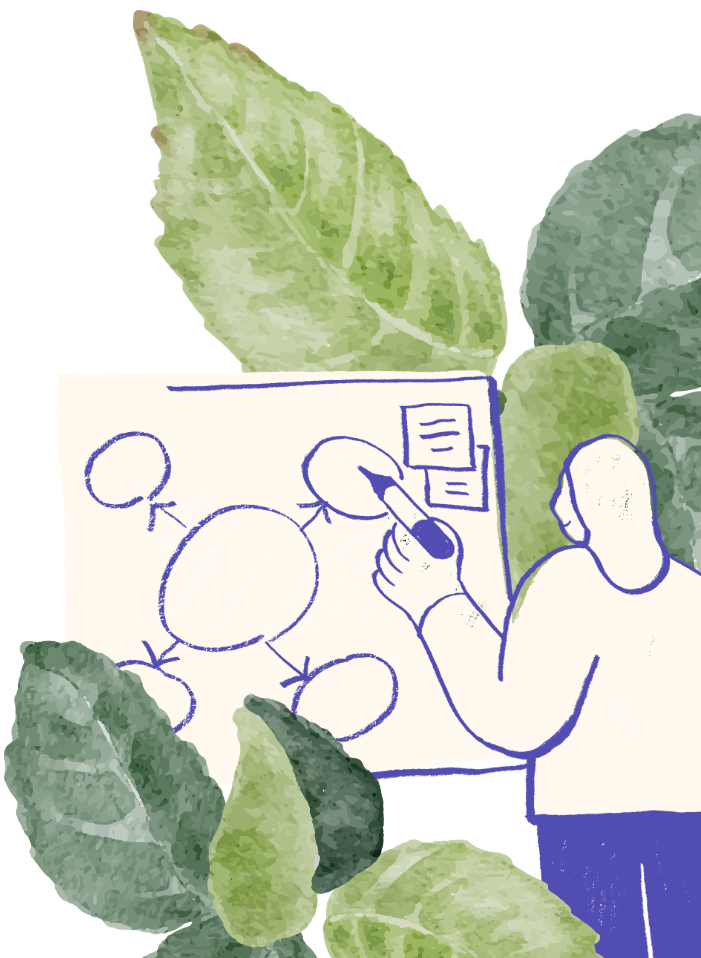
media message box worksheet
We are sharing a worksheet that can be helpful in crafting a message box that understands multiple sides of the conversation. Your job is to develop your unique message and then stay there – in your positive statement – and relegate your opponent to a negative box. It might take a bit of research to know what the other side is saying, but its well worth the time and effort to know how to respond to their message box (because they definitely have one!).
We have chosen this version of the message box because it aligns with the ways that we at the BC Poverty Reduction Coalition try to reframe stigmatising narratives around poverty to hope- or goal-oriented narratives. There are other formulations of this message box that are shaped around different goals.
This formulation at emeraldstrategies.net/campaign-message-box-explained is a useful tool for constructing your message box if you want to understand or respond to what an opponent is saying about people who receive social assistance.
This formulation at compassscicomm.org/leadership-development/the-message-box is a useful tool for educating on an issue that includes benefits and solutions.
Worksheet template
Click on the worksheet template to enlarge or click here to download it.
Worksheet example
Click on the worksheet above to enlarge or click here to download it.
Using the message box worksheet
The top left is your positive message: what do you say about the issue. This message reminds them of your common ground, or says something that will get them to agree or at least nod their heads.
Next to it is your negative message: what you say about the other side of the issue. A key tip on addressing your opponent’s message box is not to repeat it! This also goes for what your audience’s misunderstanding or misconception might be (ie. you don’t want to repeat or say anything about low-income people shoplifting). Rather, provide new or unexpected information to overcome this barrier to your audience agreeing with your message.
Bottom left is the ask: is there an action you want your audience to take? This is where defining your audience comes in handy. This is where you clearly make the call for more funding for a social program or for the public to support a certain issue.
Bottom right is your vision statement. This message point echoes the value message point. It says to people: this is our shared goal that can be achieved if we take that action.
Tips for bridging or re-framing questions
We don’t control what we get asked during interviews. Sometimes we get asked hard or irrelevant questions, or get asked questions that sound like accusations. We can build the skills to stay in our message box or re-frame the question to get back to what we want to say.
ABC’s of re-framing or bridging
Acknowledge (“that’s a fair comment”) or Refute (“not at all”)
A
Bridge “For me, the most important thing is…” or “Another way to look at this issue is…”
B
Communicate your key message
C
Example 1
-
The Vancouver Sun calculated that $1 million each day is spent on services in the Downtown Eastside. Does it really make financial sense to invest more?
-
I don’t know about that calculation.
-
What I do know is that as long as there are people still living on the street, it means there aren’t enough safe, affordable, and accessible place for people to be.
-
The government needs to be responsible to their own promises and plans to ensure that everyone has access to dignified housing and basic services.escription
Example 2
-
During times of fiscal restraint, shouldn’t the government be focused on affordability for everyone and not just low-income people?
-
More than 4 million people in Canada live in poverty, so this is an issue in every community, in many kinds of households, and in many parts of their lives from housing to food to transportation.
-
For us, the important thing is making sure that there is a strong and dignified social safety net that people can rely on.
-
It’s imperative that we see real commitment and investment from the government to ensure households are supported in equitable ways during times of crisis.
A journalist does not have the right to every question being answered. Saying “no comment” is a way to avoid answering a question you are not prepared to answer, but sometimes journalists can ask questions that put your safety or well-being at risk. This is especially the case if they are seeking a personal story from you about the impact of a policy decision or recent event. As in any relationship, you have the right to assert boundaries with journalists before and during an interview.
Tips for expressing a boundary or saying no to a press request
We also advise researching the journalist and publication, and asking what their angle to the story is, and who else they are speaking with to get the context of if you want to take the interview. They may not always take the time to tell you this - journalists are often working on tight deadlines - but it is worth asking.
You can also send background, supporting, or guiding information to a journalist or news outlet in advance of an interview or to accompany a press release. For instance, if you are talking about income supports and housing for women fleeing violence, you could include this primer on language to use when reporting on gender-based violence. If you want to encourage journalists to undertake more ethical practices in reporting on low-income and unhoused peoples’ experiences you could also include either of these guides in your background:
Global Reporting’s empowerment journalism guide.
Megaphone’s Shift Happens guide for reporting in the Downtown Eastside.
Terms to know
Not everything needs to be on record. If you are taking part in a pre-recorded interview or discussion with a reporter, remember these terms:
On the record: The information you provide may be published. You will be identified by your name and your job title.
Off the record: The information you provide is not for publication. Say you’re off the record, and ask the journalist to confirm, before speaking.
Not for attribution / on background: The information you provide may be published, but your name and job title will be kept anonymous. Here are some examples of ways to create a boundary with a journalist
examples
“I appreciate you interviewing me, but before we begin…
I’m not comfortable being asked about…
You can only publish my quotes using… [just my first name, a pseudonym]
I’d like the chance to approve my quotes before you publish them.
I am comfortable speaking about [this topic] on record, but for [this topic] I would prefer to only speak on background.
“I’m not available for interviews right now / on that topic…
“I know another organisation / person who is better positioned to talk about this.”
Can I connect you to staff at [an allied organisation]?
Can I connect you to [another person] who can speak about their lived experience?

Checklist for hosting a press conference
A well-run press conference has many benefits for your campaign and advocacy. They remain invaluable for advocates to control the message around changes to legislation, major investments, missed opportunities, crisis communications, recently release data important to your issue, and community engagement.
Set your goals and craft your message
1
Consider a venue that is easy to find, centrally located, and have accessible parking or be near public transit. It must also be physically accessible for attendees with disabilities.
For hybrid or virtual events, have dedicated tech support to manage a livestream, camera angles and remote Q&A.
The location should match your message or be relevant to your issue (outside an MLA or MP office, near a housing site or key service provider, etc).
Identify 1-3 main points you want to get across to media and the public
Identify if there are others working on this issue that you want to invite to create a unified or intersectional voice on the issue?
2
Choose a good venue
Prepare a press invitation and package
3
Logistical details: location, time, availability, for questions
Press release or fact sheet with basic information on what is being discussed at the press conference (who, what, when, where, why)
Speaker biographies with contact details
Arrive early to coordinate all operations including any mics, podiums, tents, chairs, etc.
Have one point of contact who is monitoring speakers and reporters arriving, ensuring the flow of speakers, and facilitating Q&A
4
on-site coordination
Provide any additional facts or data that were requested during the Q&A. If you promised to “get back to” a journalist on a specific number, respect that journalists are working on a tight timeline.
Monitor the coverage: As stories are published, track them to see who covered it and what the general sentiment is.